My acoustic instruments
Yishama — two handpans born of a chance meeting
Two 18-note instruments, tuned to 432 Hz, designed with Yonathan for one reason only: so that I could sing and accompany myself. Here is their story — and what they taught me.
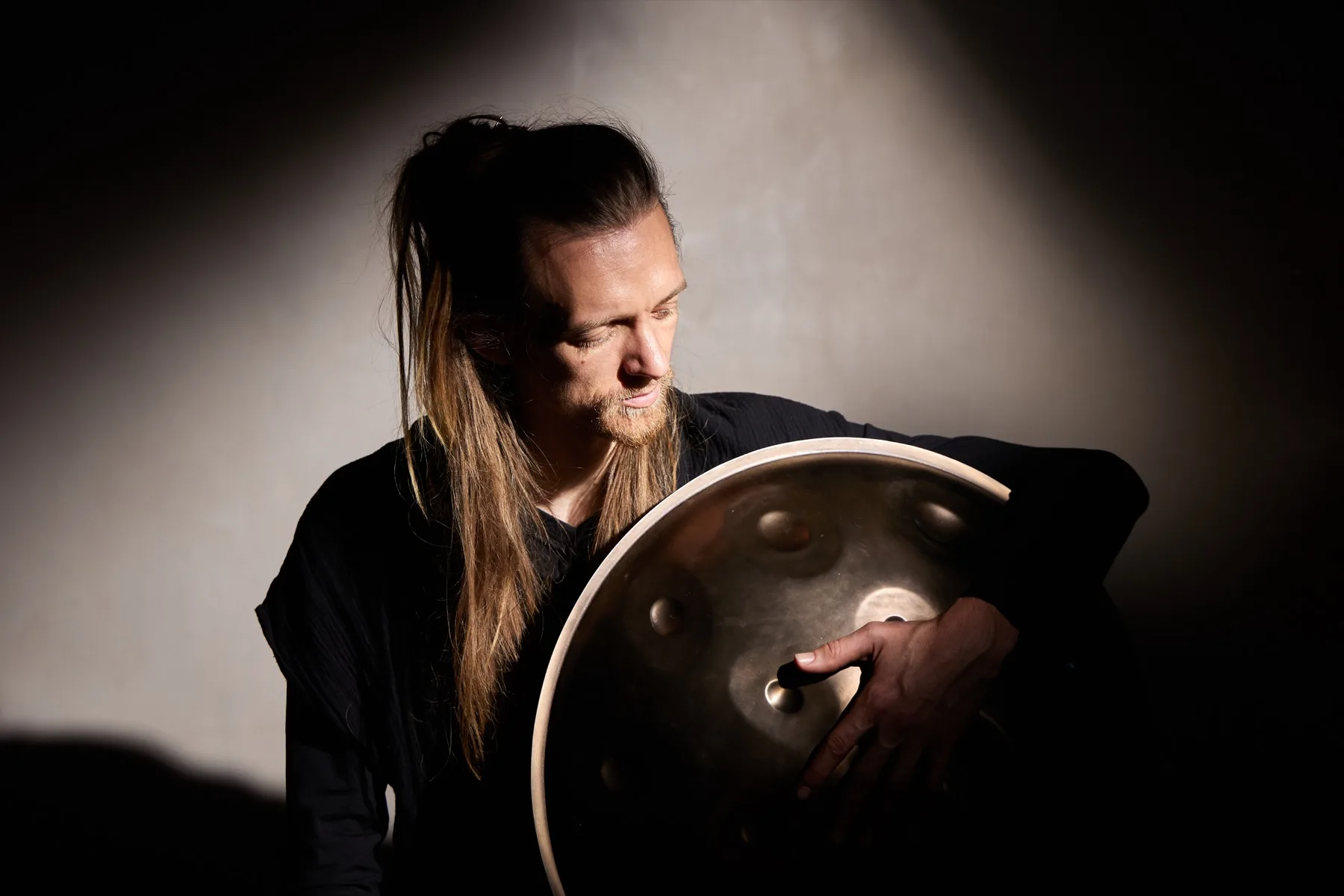
Naxos, Greece · 2022
A man met by chance, the day after a concert
I had played a handpan-and-voice concert the evening before. The next day I ran into a man at the festival’s outdoor bar. I had no idea who he was. Someone explained: one of the finest handpan makers in the world.
I told him about the dream I had been carrying for years: “a handpan piano”. To sing, to play covers, to accompany my own voice — without going round in circles inside a single mode.
He listened for a long time, calmly. He did not try to sell me anything. He even told me that, given how percussive my playing is, he was not sure his instruments would suit me.
That day, on that small island, I discovered the international handpan world: instruments with notes on top and underneath, deep basses, a level of craft I had not even suspected existed.
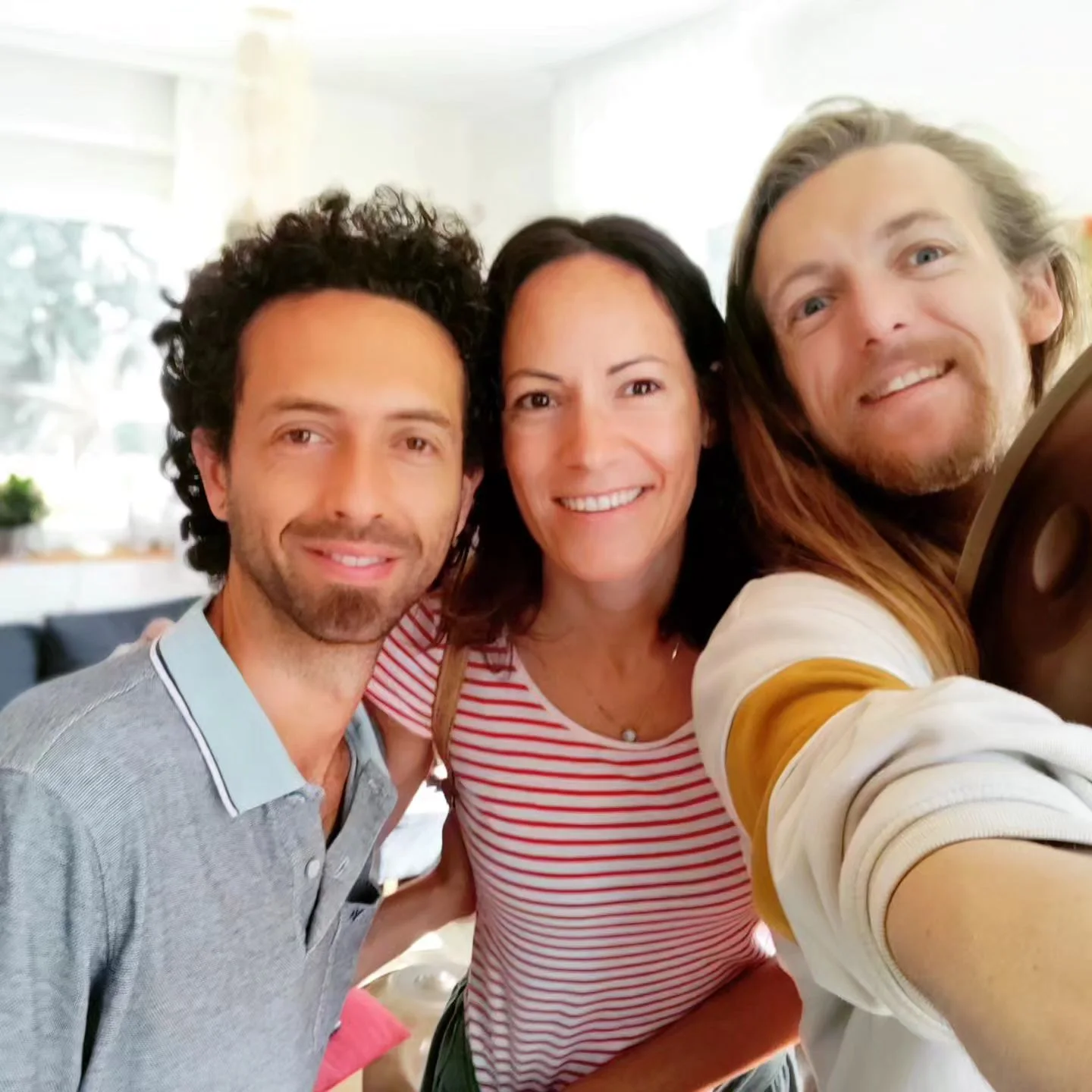
« When I met Yonathan, the CEO of Yishama, and Andréa his wife, I immediately felt the delicacy and the depth of the person in front of me. »
HUG Festival, Hungary
He came up to my room with a pencil
A few months later, at the HUG festival in Hungary, Yonathan came up to my room with Andréa. He started asking me questions. And drawing.
I understood very little of it — I have no engineering background. I only knew what I wanted to hear. He translated that into dimples, thicknesses, octaves. Only one technical thing mattered to me: as many domed notes as possible underneath, like little dings — they speak far more easily than dimpled ones.
For everything else, I handed him my complete trust. That is when he decided to make me an ambassador for his brand. But before that, he had taken a genuine, sincere interest in me. Then he welcomed me into his home in Budapest before I caught my flight.
The reason it exists
Why two handpans — and why these two
They are not two instruments side by side. They are one system in two pieces, built around a voice.
The handpan is a beautiful, stubborn instrument. A scale is a choice — and therefore a renunciation. Nine or ten notes, and there will always be that one missing note that would make the chord you dream of playable.
For a singer it is worse. Accompanying a voice needs root basses: without them you play inversions, and the voice loses the ground under its feet. I wanted to rest my singing on the lowest note of each chord, then climb the arpeggio — D3-F♯3-A3 sitting on a D2, B♭2-D3-F3-B♭3.
My request fitted into one sentence: two instruments that, together, give me every sharp and every flat. So I could sing in any key, with the root of every chord down in the bass.
« My dream is to be able to sing and accompany myself easily on the handpan in every key, across the widest possible range, without being limited by missing notes. »
And why 432 Hz
I am fascinated by the effect of vibration on water and on the body — cymatics. That is why I asked Yonathan for a tuning based on A = 432 Hz. He replied that it was possible, but that he had to be certain before starting to tune: on a handpan, that choice cannot be undone.
May 2023
The day they arrived
I have no careful picture of that moment. I have the ones I took on my phone, in the order it happened: the van, the crate, the case, the instrument — then the letter, and the next day.
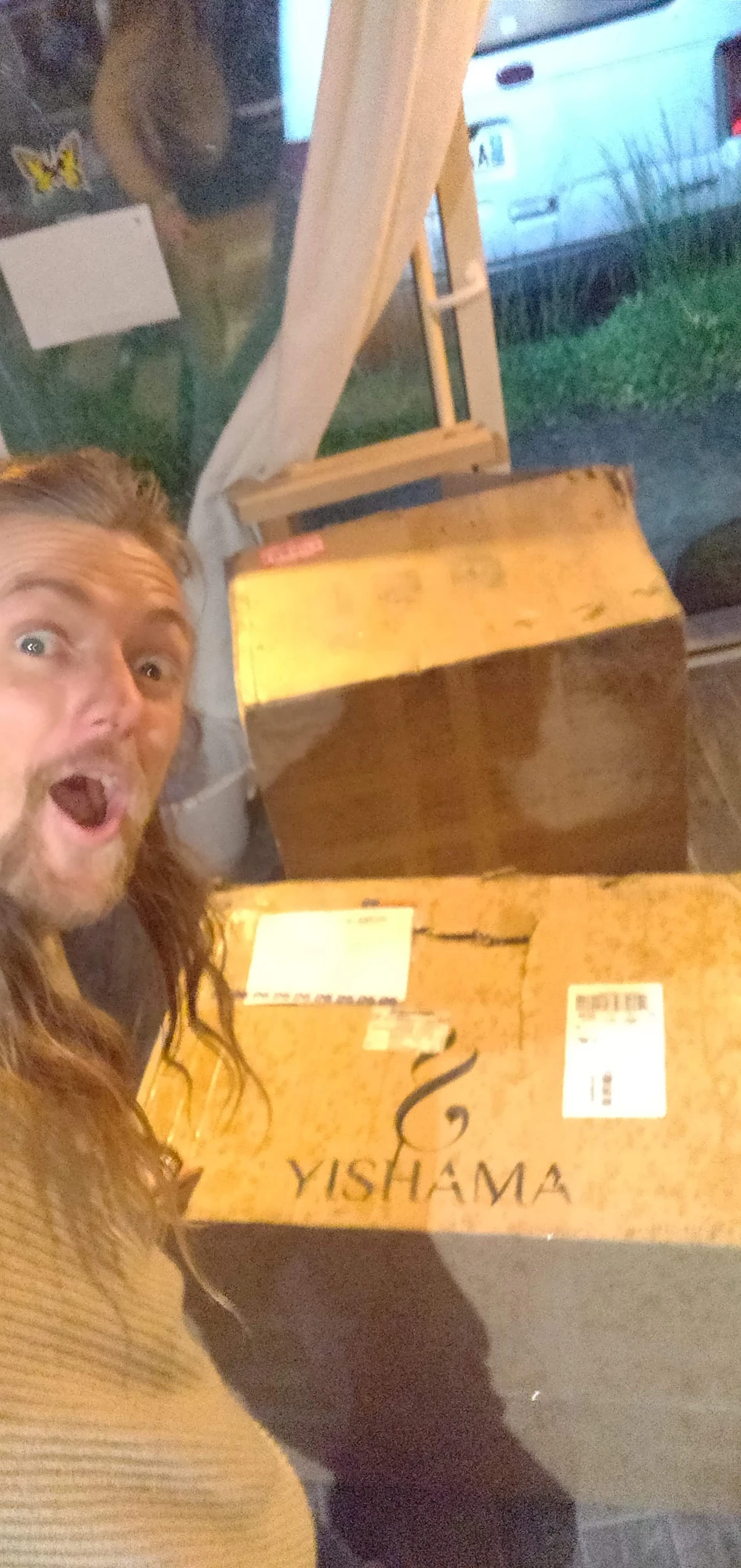
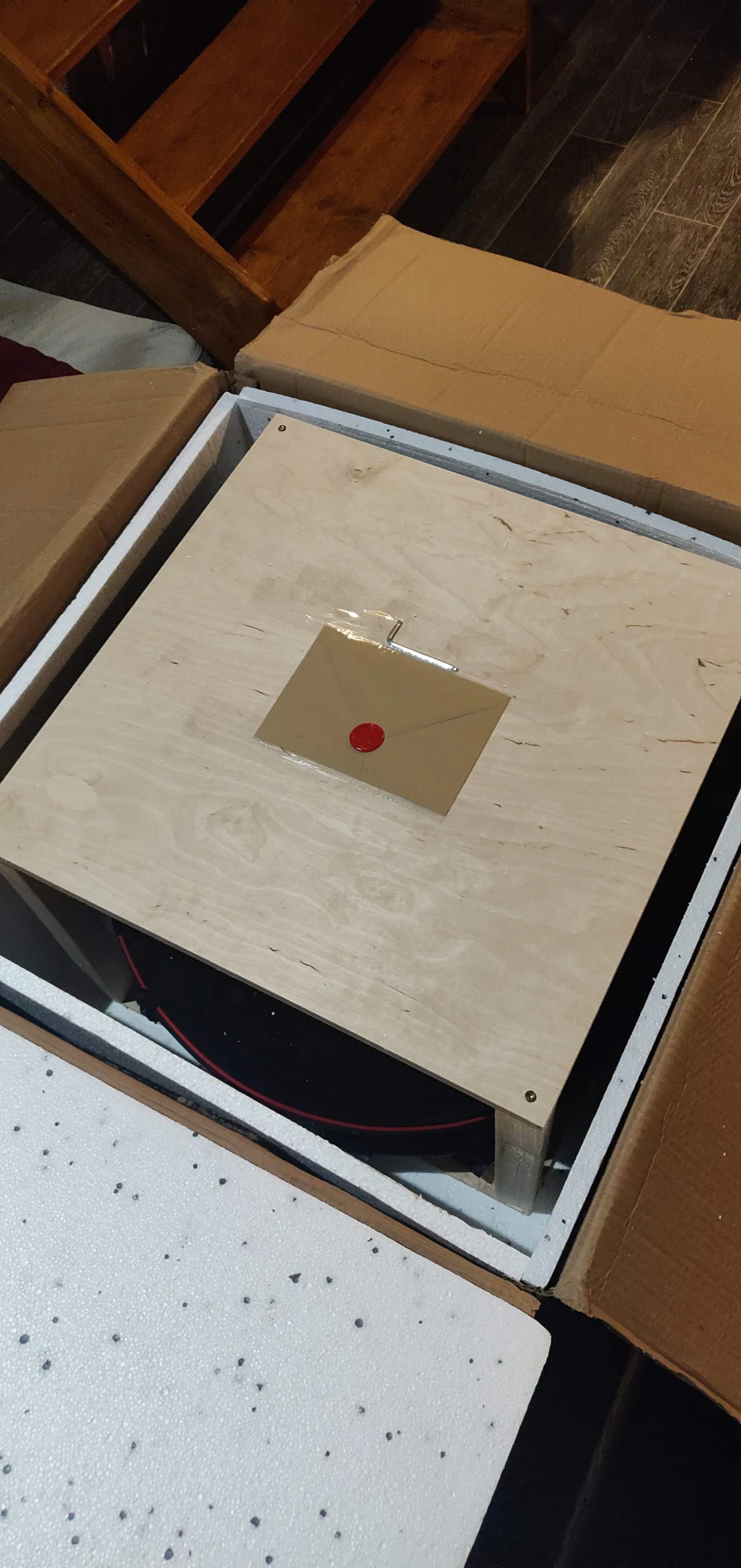
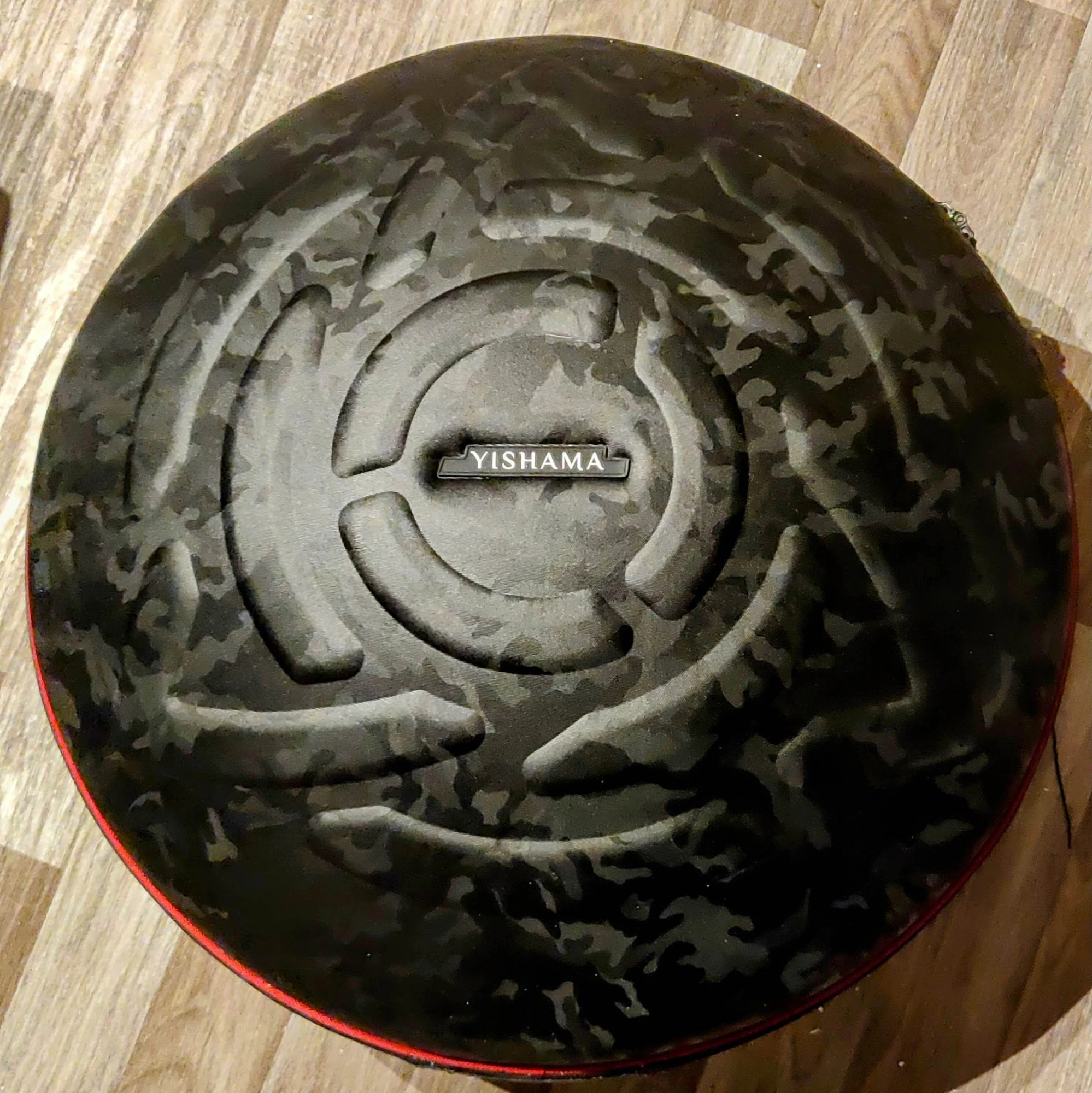
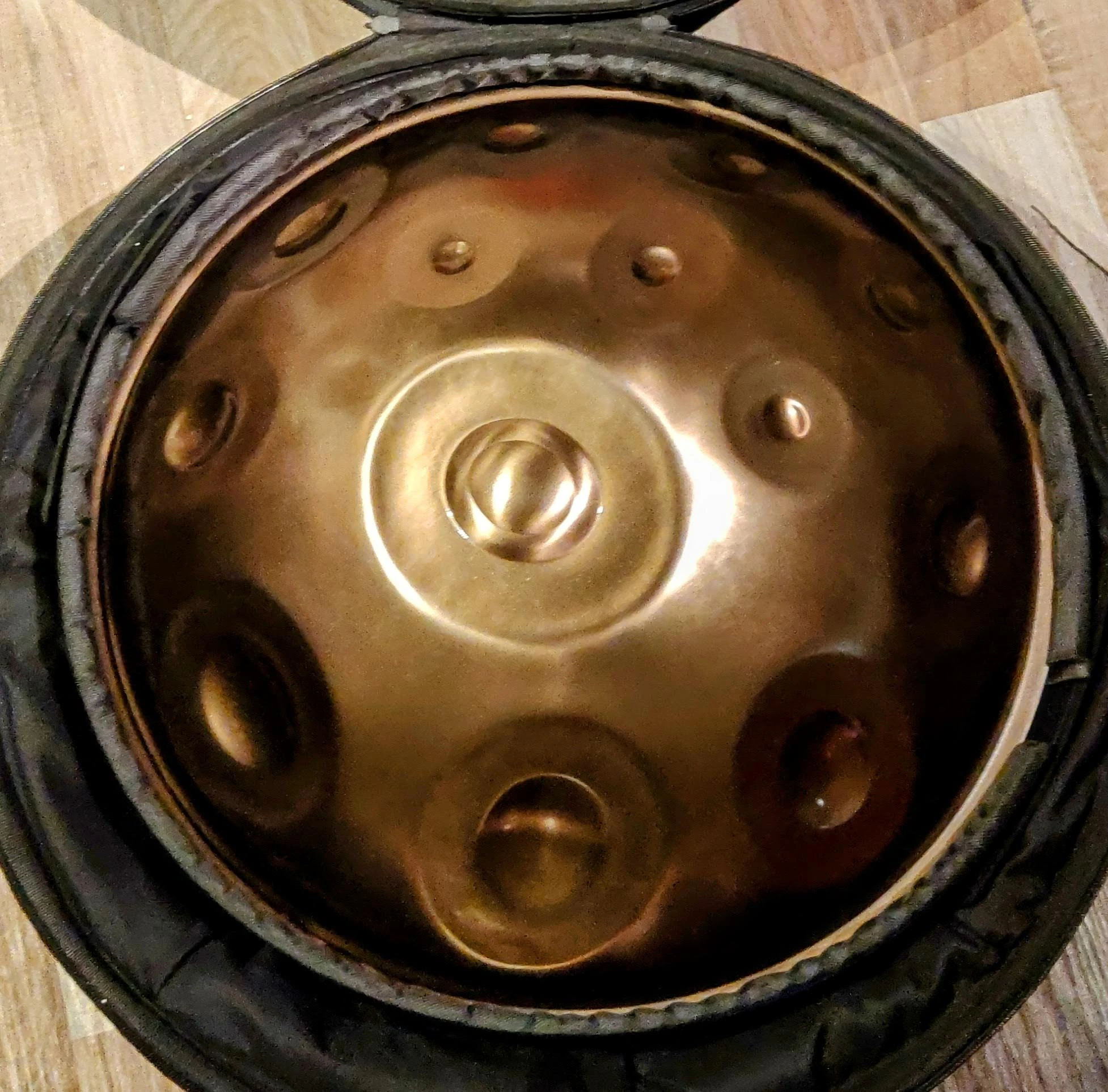
Inside the crate there were papers too.
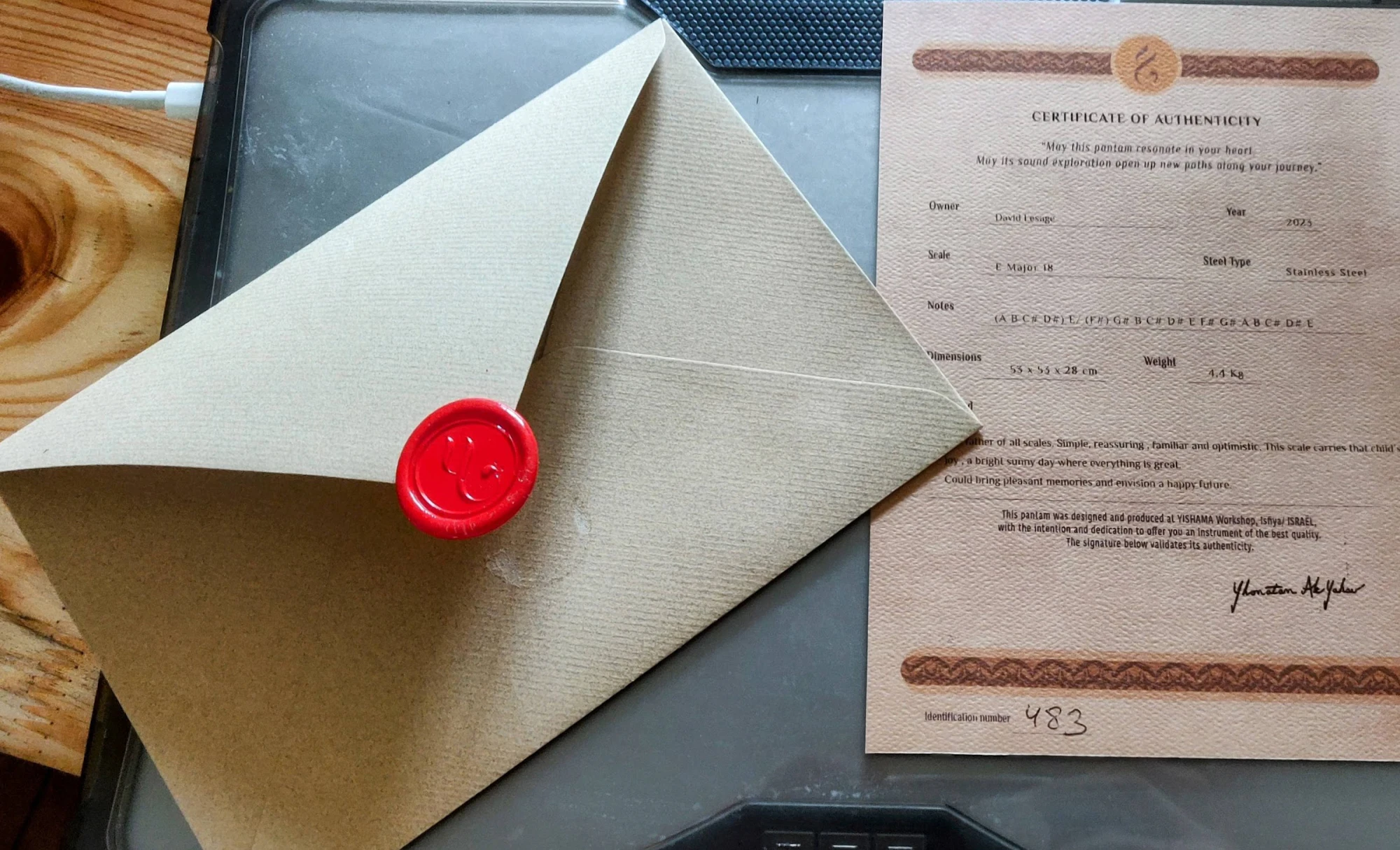
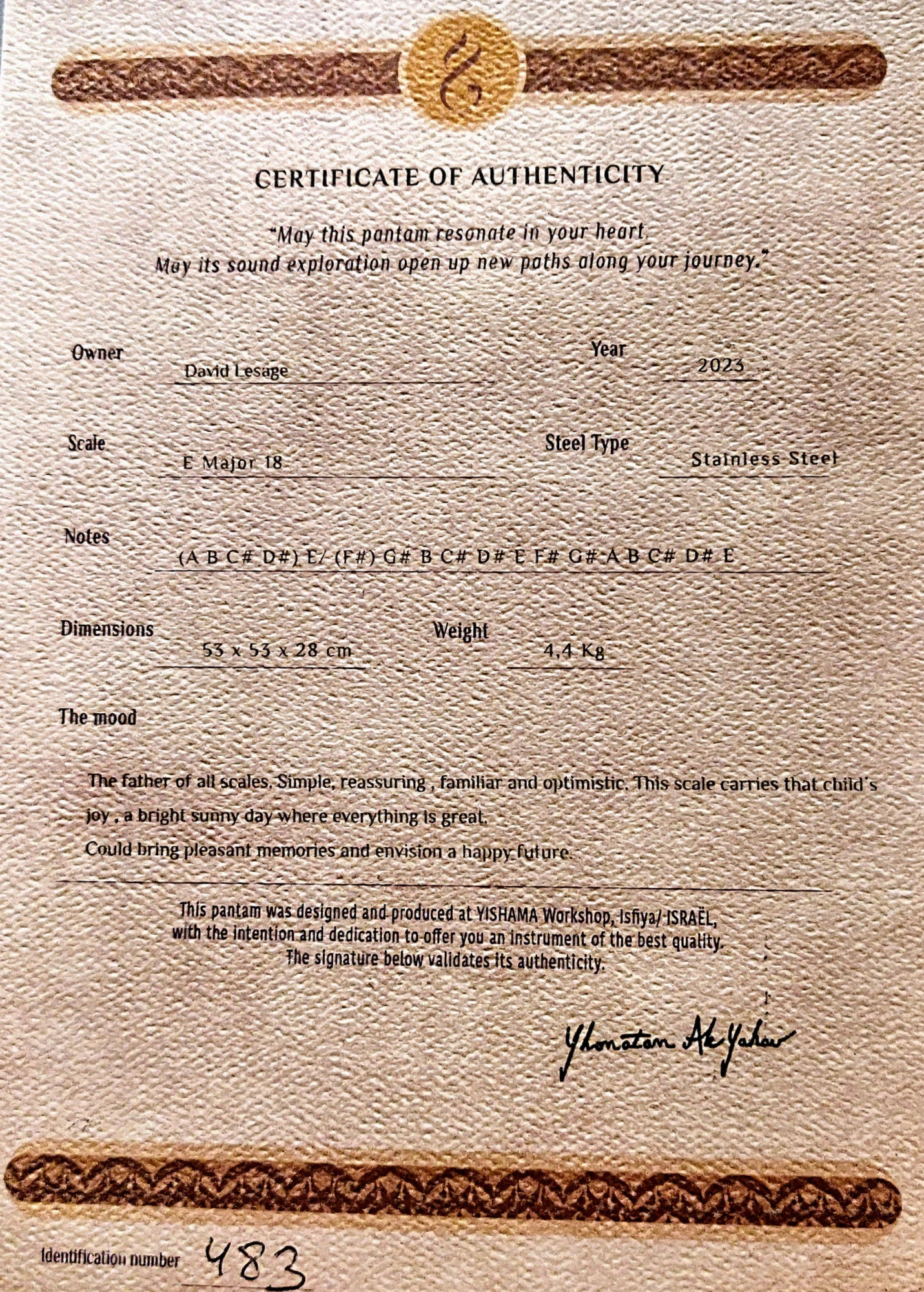
And the next day was my birthday.
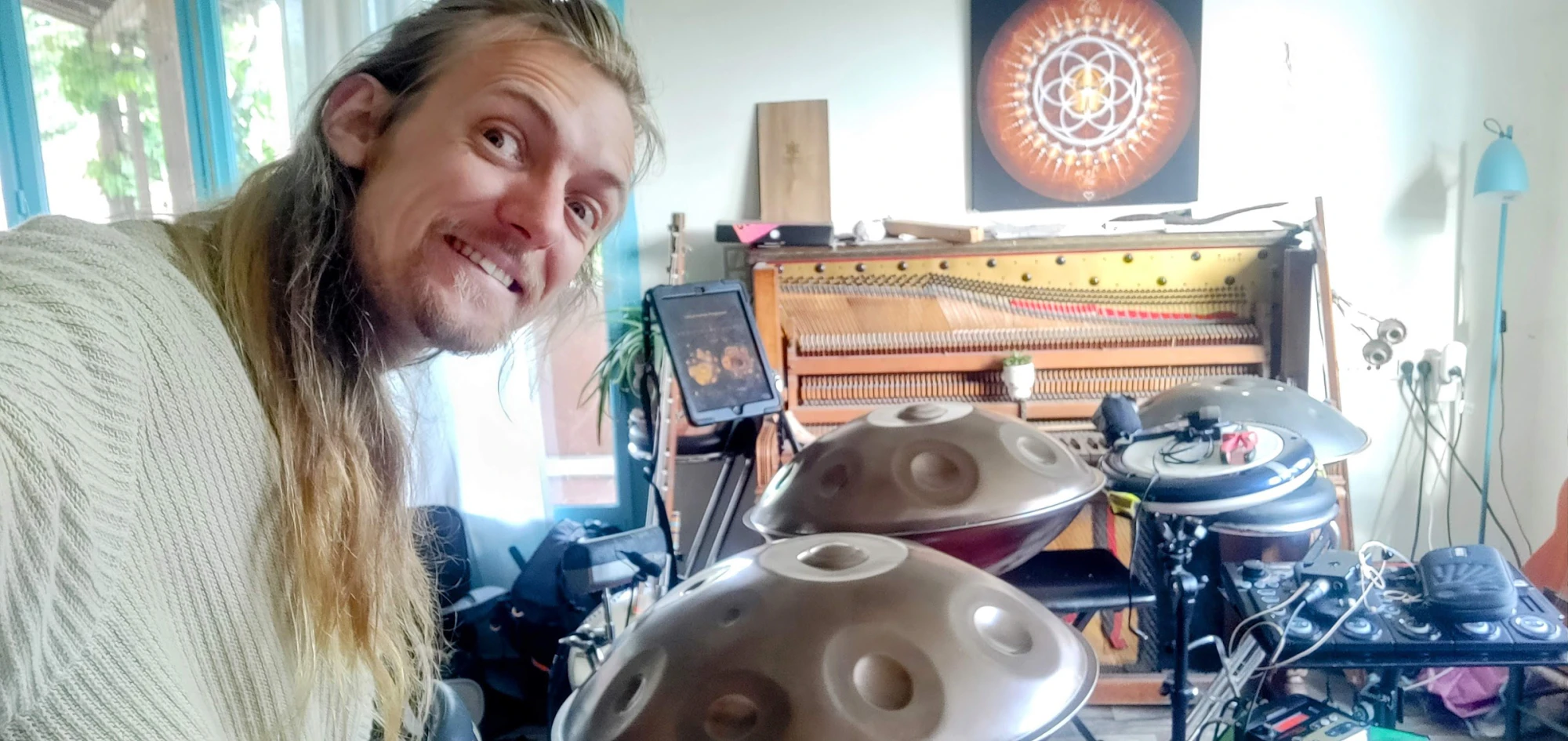
Click any photo to open it full screen, then use ‹ › to move between the eight. The certificate can only be read enlarged.
The two instruments
Eighteen notes each, delivered in May 2023
They arrived in secured wooden crates, travel cases included — almost exactly on my birthday.
Made by Yishama — designed by Yhonatan Ale-Yahav. These two scales are in no catalogue: they were made to measure.
The brief was mine, and it was a singer’s brief: to accompany myself on handpan the way a guitarist or a pianist would. So: every chord, in every key, with the root of each chord available as a bass note — and a ding. I had no idea how that could be possible. Yonathan’s intelligence is what made it happen.
D Kurd 18
18 notesDing D3 · Tuned to 432 Hz
Top · 12
- D3
- A3
- B♭3
- C4
- D4
- E4
- F4
- G4
- A4
- C5
- D5
- B♭5
Bottom · 6
- B♭2
- C3
- F3
- G3
- F5
- G5
E 18
18 notesDing E3 · Tuned to 432 Hz
Top · 13
- E3
- G♯3
- B3
- C♯4
- D♯4
- E4
- F♯4
- G♯4
- A4
- B4
- C♯5
- D♯5
- E5
Bottom · 5
- A2
- B2
- C♯3
- D♯3
- F♯3
These are one-off pieces: the names are my own working labels, not Yishama catalogue models. Each instrument on its own gives all seven degrees of its scale, with the root available in the bass.
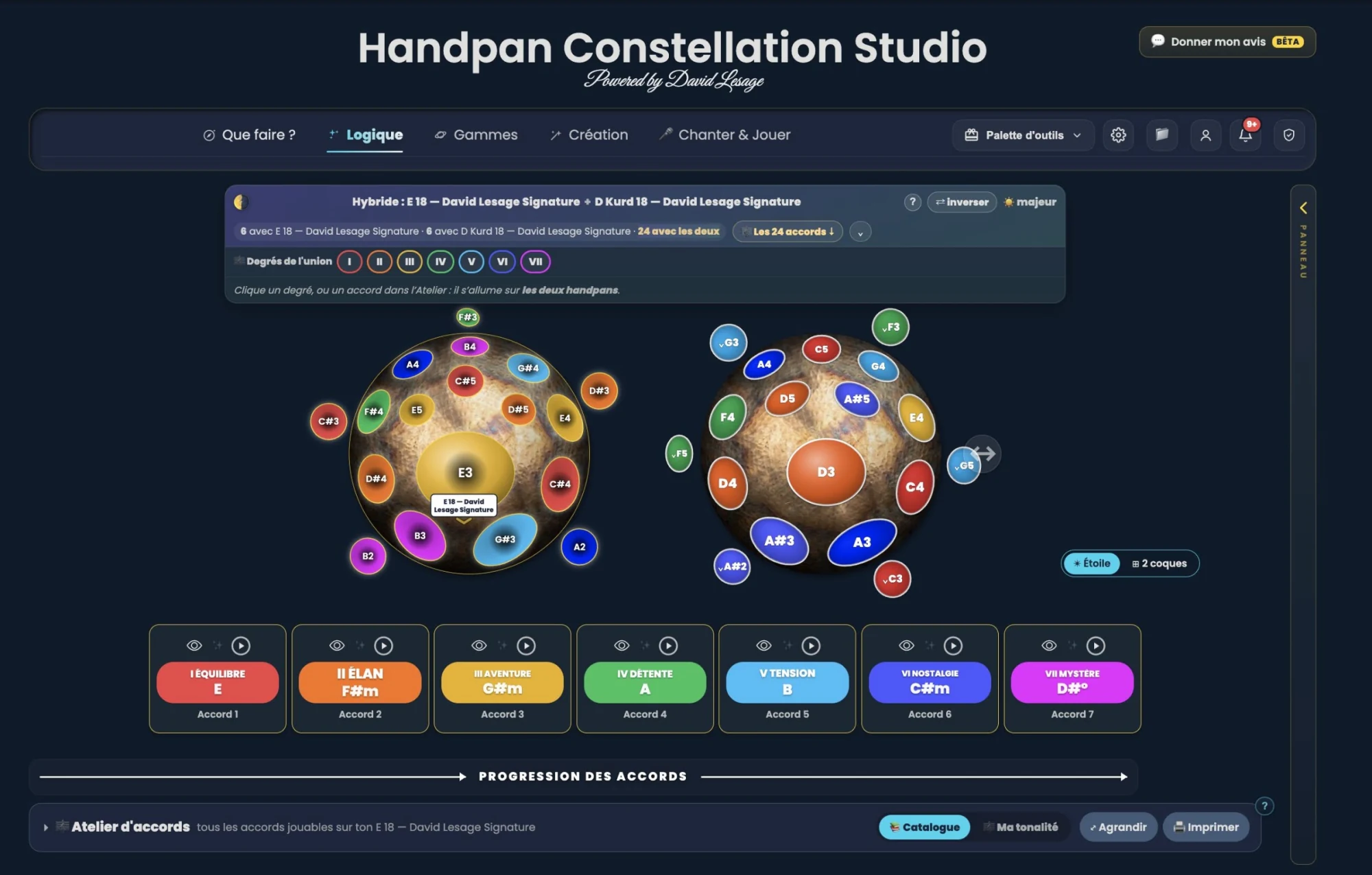
Dense screen: open the screenshot, then click it again for full size — that is where the note names become readable.
Together
A chromatic handpan, in two pieces
Separately, each covers its own scale. Together, their 36 notes cover all twelve semitones — without exception.
36
notes in total
12
keys
24
major & minor chords
432 Hz
tuning
All 24 major and minor chords become playable, and every one of them has its root down in the bass. Which is exactly what I had asked for: never again being forced into an inversion for want of a bass note.
Yonathan built, without either of us ever calling it that, a chromatic handpan in two pieces. He designed them as one system: he removed a note from the first because I already had it on the second — to free up room for another.
One honest caveat: this describes the availability of the notes, not yet the fluidity of the gesture. Moving from one pan to the other mid-chord is still gymnastics. That is precisely the problem that ended up producing my app.
The metal
Three steels, three voices
At Yishama the metal is not a finishing detail: it is the first choice, the one that decides timbre, sustain and upkeep. Three families are offered — click for the detail.
Since 2021, every Yishama carries a laser engraving inside: serial number, scale name, and material type with its thickness.
The maker
Who Yishama are
An Israeli workshop, also present in Hungary, among the finest handpan makers in the world.
“Yishama” comes from the Hebrew (יִשָּׁמַע) and means to be heard. Their stated intention: to create a sound sculpture that offers the individual a unique experience of self-exploration through sound, beat and harmony. Their motto fits on one line: “At Yishama, we strive for quality and passion.”
Yonathan and his team build instruments with very deep basses and sparkling highs. When I heard Kabeção, Nadishana, David Kuckhermann, Alexandre Lora and Flavio Salvaje play on them, I understood that these were the instruments I wanted to work with.
What they say themselves
Every instrument is signed
Since 2021, a laser engraving inside gives the serial number, the scale name and the material with its thickness.
The format
Around 55 cm across the outer rim, 28 cm from the port to the top of the ding, and 4.4 kg on most models.
The first retuning is free
With proper playing technique a Yishama stays in tune for years. The first retuning is free of charge — only shipping is at your expense.
Every piece is unique
No waiting time announced in advance: the work is handmade and made to measure. They do occasionally keep instruments available immediately.
Full disclosure: I am a Yishama ambassador and affiliate. If you go through my link I earn a commission — it changes nothing about your price. I only represent makers whose work I genuinely love.
In music
What I recorded with them
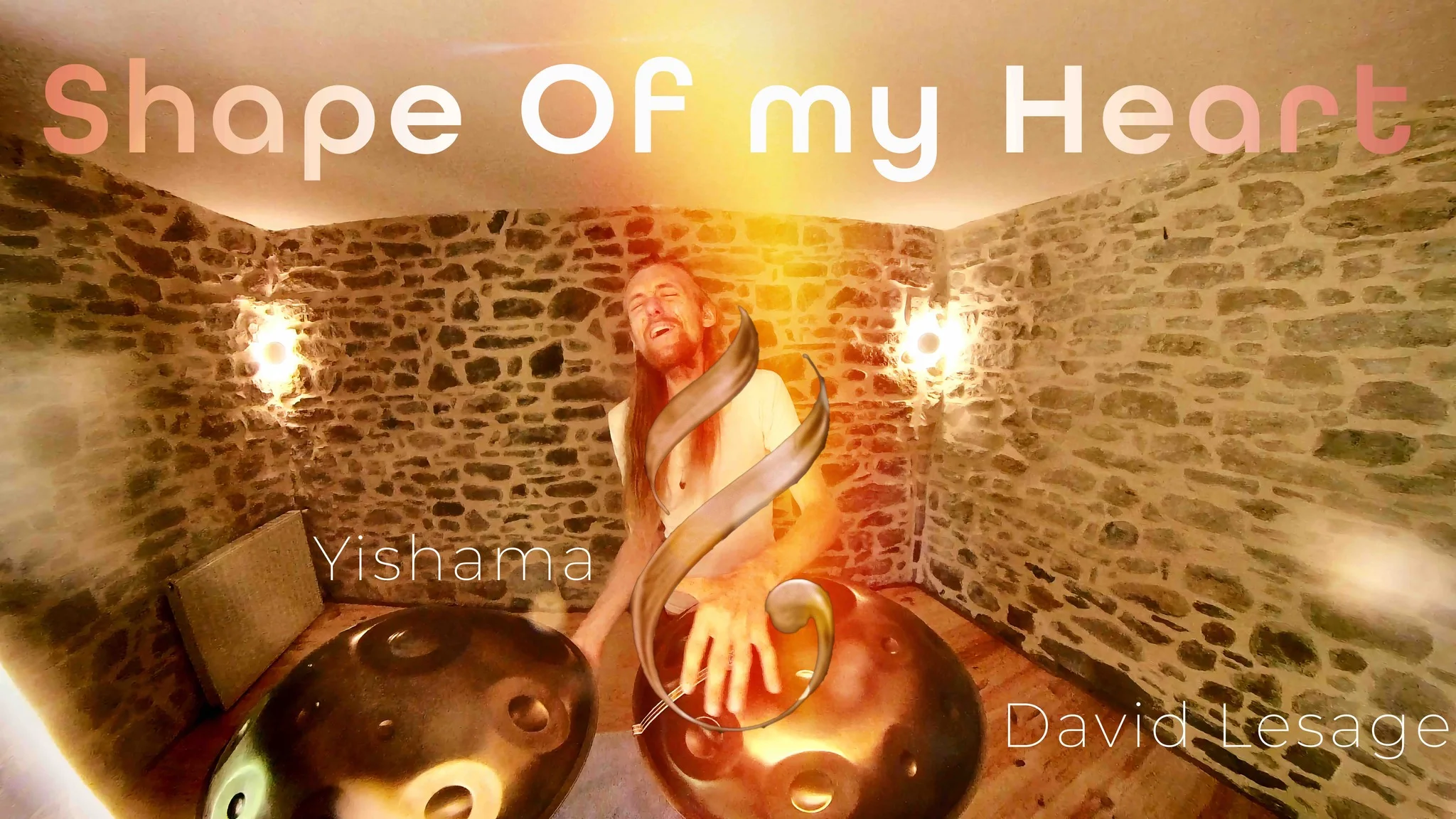
A Sting cover, a prayer, a Hungarian folk song, some French rap. All played on the two Yishamas, at 432 Hz.
The video that moved Yonathan
Shape of My Heart — Sting
When I sent it to him he replied: “wow wow wow very very beautiful! […] your voice is incredible, touch my heart very much! I would love to share this with our Yishama audience.”
What those two pans produced
Nobody could have handed me the method — it did not exist
I was happy and completely lost. Two magnificent, very complex instruments, delivered with no manual. As if I had been handed two spaceships — except the flight manual was written nowhere, for nobody.
The handpan is a 21st-century instrument, still evolving fast: it has neither the centuries of piano teaching behind it, nor those of the guitar. And it cannot even have one method — there are as many handpans as there are scales, note layouts and note counts. What holds true on one instrument no longer holds on the next. That is nobody’s oversight: it is the youth of a living instrument.
On top of that comes the very thing that makes it magical: the handpan is most often a modal instrument. That is a strength, and a wonderful way in — especially if you have never played music, you get a beautiful result almost straight away, with no theory. But you also go round in circles very fast. And the moment you are a professional musician expecting chromatic freedom, or you want to sing real songs over it — my case — it becomes very complex, very quickly. I came from drums, a purely rhythmic instrument: I had no grounding in harmony to fall back on.
In August 2023 I started a document to work out, at last, how to build my chords across the two pans. Coloured cards, one colour per note. That document became Handpan Constellation Studio.
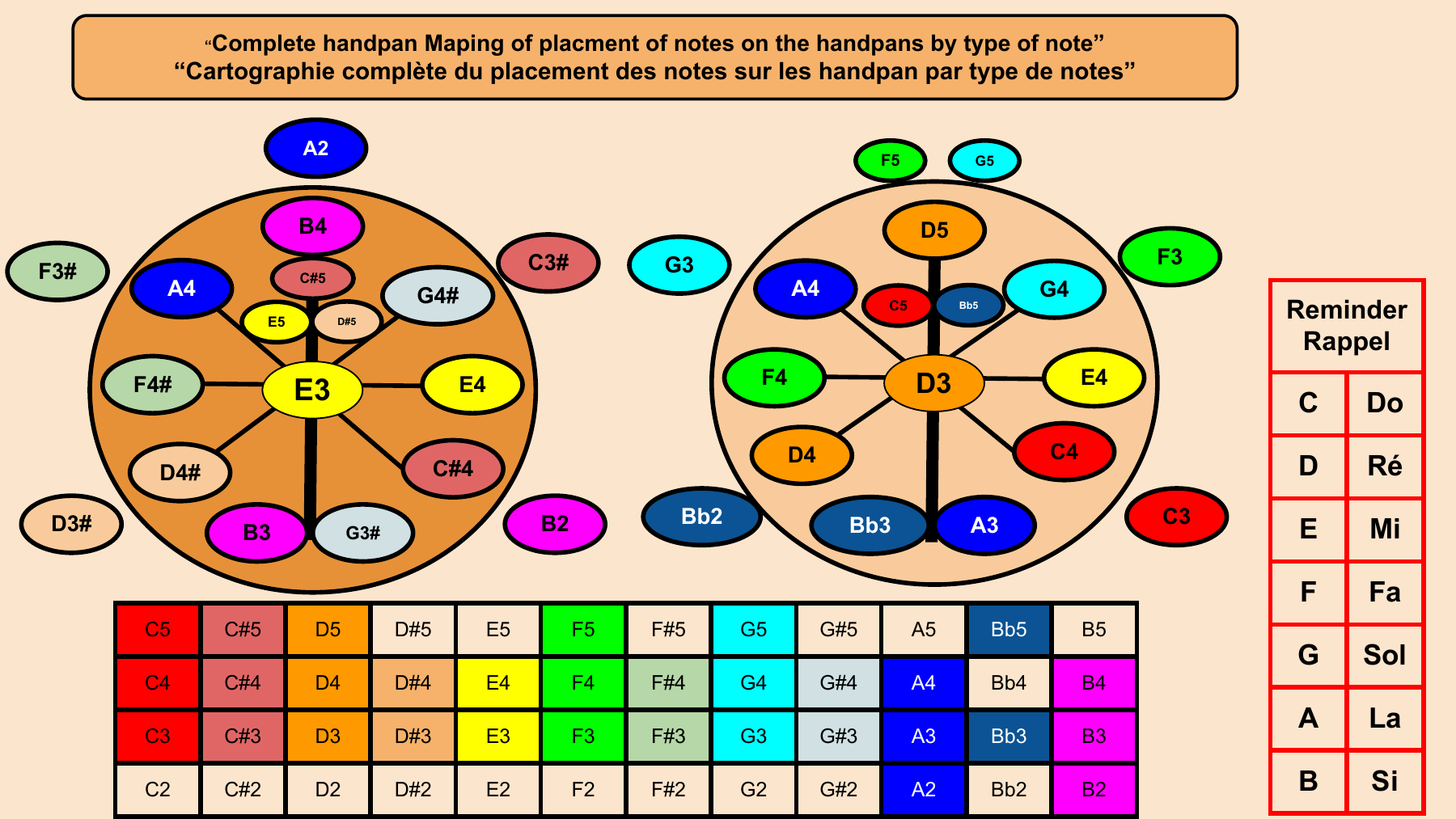
Dense image: open it, then click it again for full size — that is where the note names and the grid become readable.
The strangest part is that the original question came from him. Back in August 2022, Yonathan wrote to me about the “chromatic, singer-composer” instrument: “try to play some songs in the app on that scale, so we understand which notes you’re missing — and we can find a way to add them.” Three years later, the app answers that question, for everyone.
What the app does today for an acoustic handpan
Everything below is free, and needs no electronic instrument.
Your scale, in colour
You pick your instrument: the app draws your shell with your real notes, each dressed in its colour. The screen becomes a mirror of your pan.
440 / 432 Hz tuning
One setting tunes the app to your handpan — so that what you hear on screen rings true against what you have in your hands.
🎯 Complete your scale
The app compares your real notes with what the chords require, and tells you exactly which ones are missing — then which second handpan would supply them, and how many songs that would unlock.
Hybrid mode
As soon as a second pan is there, both shells appear side by side and each chord is drawn straddling the two, with playing order and hands. Exactly my gymnastics problem — solved on screen.
My two custom scales are in the app, badged “✨ David Lesage Signature”. The badge carries my name: the brief was mine, but the scales are Made by Yishama — designed by Yhonatan Ale-Yahav. You can load them, listen to them and see what they allow, even without having them under your hands.
To be honest about it: the app does not listen to you. It does not guess your scale through the microphone — you choose it, or you build your shell note by note. From there, it reasons about your real notes.
And now
Making the handpan a real accompaniment instrument
My dream has not changed: to raise the handpan to the rank of the guitar or the piano for accompanying a voice. These two instruments showed me it was possible — and forced me to invent the method that was missing. That is the road I am still on, without setting acoustic and electronic against each other.